
grams👵🏼
and 'open door' theology

dear friends,
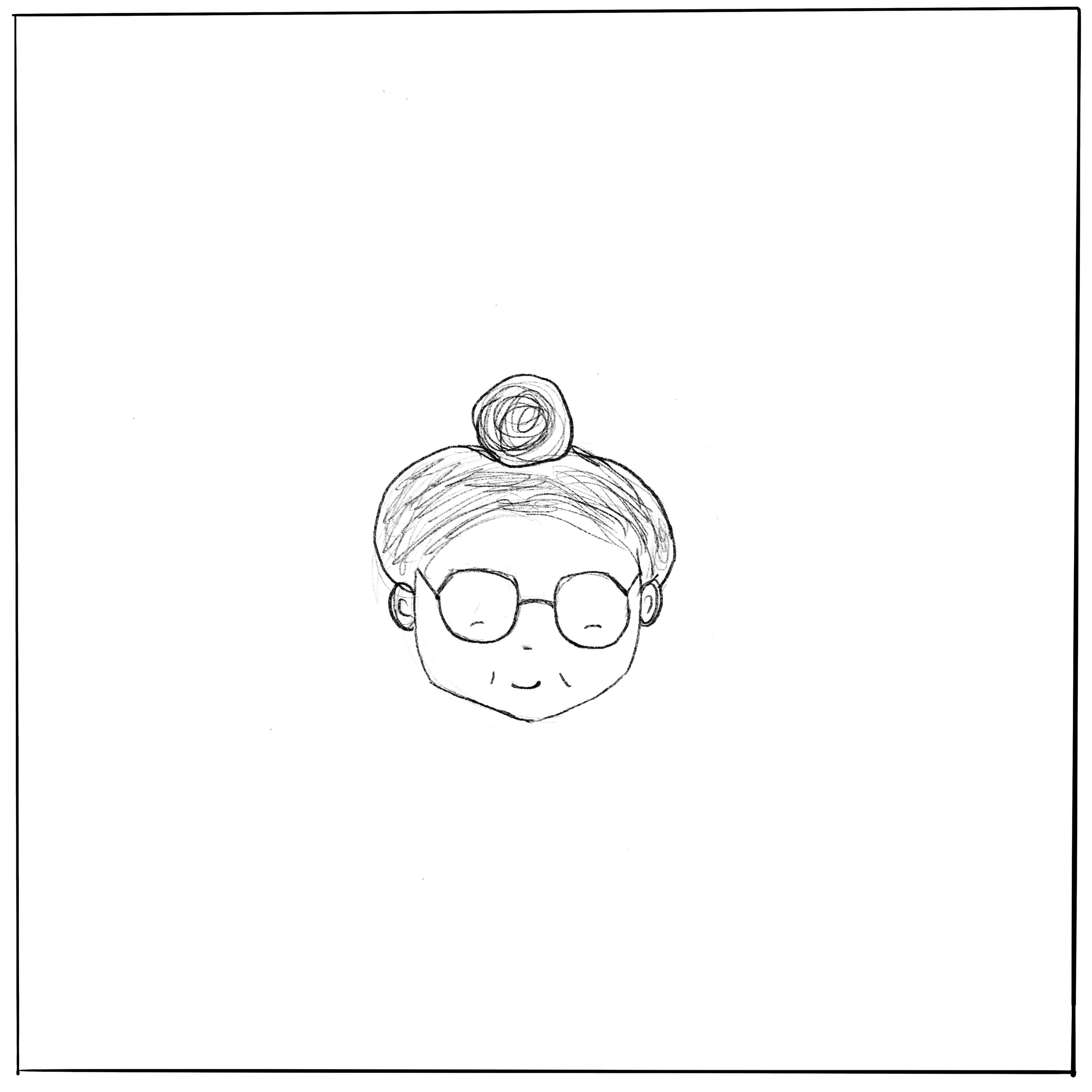
the nickname saga continues. not only does smol nephew call me “bidet”, but he also associates me with grandmas. I present to you, Exhibit B:
yes. the peppered-haired bespectacled grams in the corner of the page is apparently tedder’s mental schema of me. i love it. he could not be more spot on 👵🏼
enjoy this week’s hodgepodge!
a book
I’m in Book 3 of The Chronicles of Prydain. I like that it begins with an older character assuring a much younger one who doesn’t want things to change:
Child, child, do you not see? For each of us comes a time when we must be more than what we are.
And then sets her off on a journey.
a quote
I’ve been thinking a lot about how the Bible should be both deep study and turn our lives upside-down. Grateful to be soon starting this Scripture Practice with a handful of friends. I like that it already quoted Dallas Willard:
We come to Scripture as part of a conscious strategy to cooperate with God for the full redemption of our lives.
fodder for thought
Remember The Sparrow book, that I’m obsessed with? I’m waiting for a few friends to finish reading so that we can talk about it. Until then, some big picture themes that I enjoy hearing Skye and Kaitlyn discuss (and also adhoc chats with my bro-in-law over dinner).
One of the things this book wrestles with is trying to discern God’s will. There’s a character in the book who talks about “if you see a turtle on top of a fence post, it didn’t get there by itself.” This comes up a number of times in the novel as a way of saying there are things beyond coincidence that are signs that God is pointing us in a certain direction to go, to do a certain thing, including going on the mission to this other planet. So the book characters take these as evidence that “God is leading us to do this. He is with us.” Of course, it all goes horribly badly. Pretty much everyone is dead. Tragedy falls upon the alien species. The wrestling that Sandoz has to do at the end of the novel is “I thought this was God’s will.” and if this is true then “is God responsible for all the evil that happened?”
I squirm a bit with this “Open Door Theology”, which is “there’s this open door, so that’s the one God wants me to go through.” I can think of numerous moments in my life when there was a very open door for me to walk through that was clearly not aligned with God’s character. Like it would have been flat-out sinful. So to just say “open doors are God’s will” is kind of weird. On the flip-side, we also have to think through how do we evaluate success. Because many of us have walked through open doors and things have turned out well in some circumstances, and looking back we think “oh I’m glad I walked through that door, it seemed like God blessed it.” Ok, so what happens when you walk through a door, like in this novel, and it turns out horrifically painful and tragic and fraught with peril and calamity? Is it evidence of it not being what God wanted you to do? It’s pretty hard when you put it up against the Cross. Which clearly, the Father guided Jesus toward the cross. It was His will. It was His plan for the salvation of the world. And it included enduring horrific evil. So I don’t think we can just discern God’s will by simply an open or closed door, and by assessing “I walked through it and good things or bad things happened.” It’s all more complicated than that.
TLDR: the more I read good novels and the more I live life, the more I have no idea how anything works. But Jesus does. So I trust in his goodness and authority.
be well, friends! drink water! stretch! smile at your neighbors! play mahjong!
love,
gramma reb
"TLDR: the more I read good novels and the more I live life, the more I have no idea how anything works. But Jesus does. So I trust in his goodness and authority."
Amen to that!